Introduction To be aware in a perilous moment is good health. It's another matter when it comes to staying alert long after the danger has receded. When you scan every room, you're on edge when it comes to small noises, and you can't switch off even when you're in no state of danger; you know …

Introduction
To be aware in a perilous moment is good health. It’s another matter when it comes to staying alert long after the danger has receded. When you scan every room, you’re on edge when it comes to small noises, and you can’t switch off even when you’re in no state of danger; you know what it is like to be constantly wound tight, always feeling on edge. It can disrupt sleep, concentration, and relationships, and many individuals suffer from it for several years without understanding why they can’t just relax.
If you are wondering what is hypervigilance and why it happens, you have come to the right place. We will discuss what this phrase means, what it is all about, how to recognize the condition, its causes, how to calm your body, and when to seek professional assistance.
Key Takeaways
- Hypervigilance is a state of heightened alertness where the mind keeps scanning for danger, even in safe settings.
- It is a pattern of protection, not a personality flaw, and it is not the same as paranoia.
- It often links to trauma, anxiety, or long periods of stress.
- Grounding habits and professional support can help your body learn that it is safe again.
Hypervigilance Explained Simply
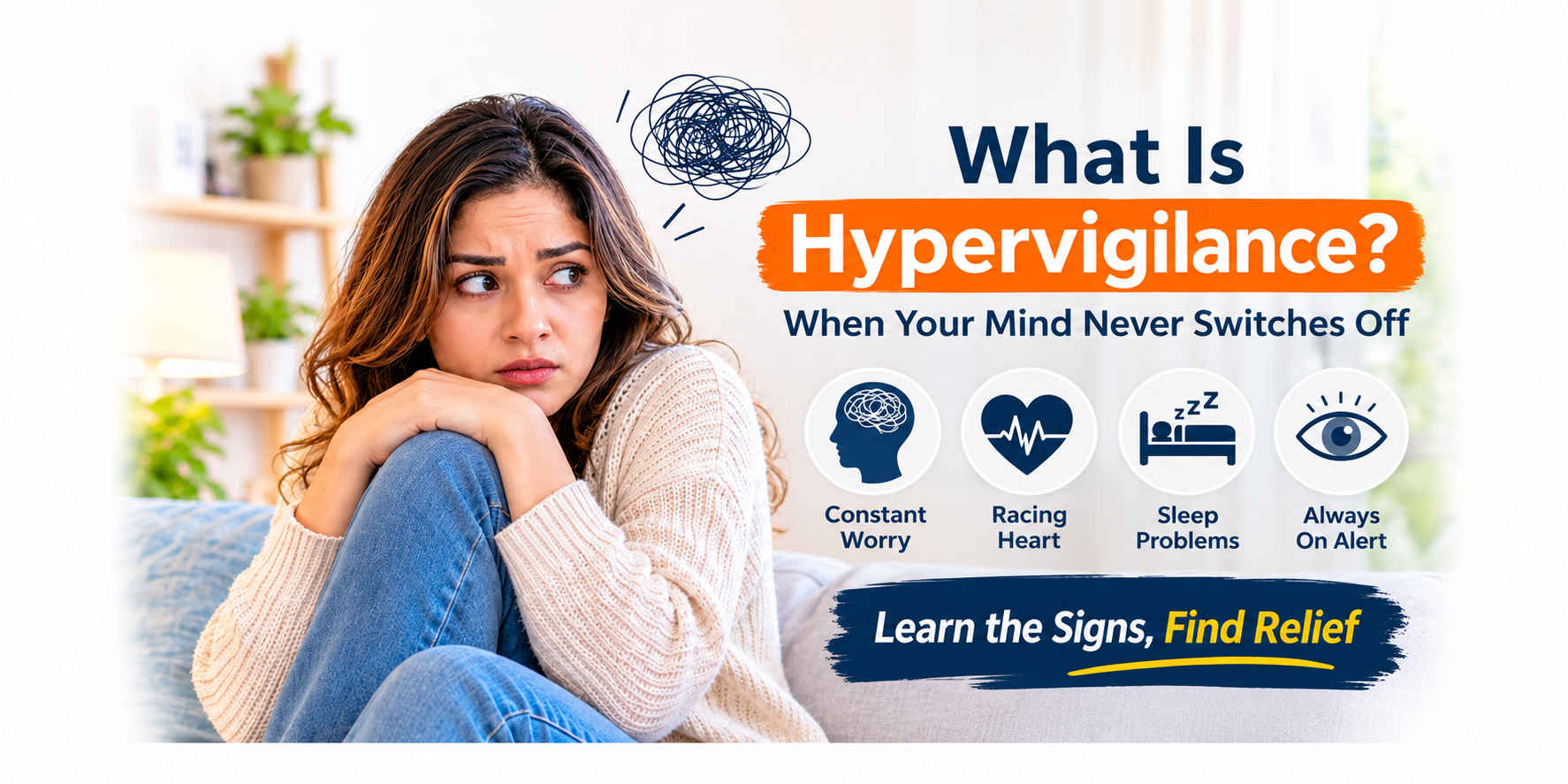
Hypervigilance is an increased state of alertness that keeps one constantly on the lookout for any signs of threat, even when there is none. It normally occurs as a symptom related to disorders like post-traumatic stress disorder or anxiety, but not as a diagnosis itself.
Imagine a smoke detector that is too sensitive. Although it aims to protect you, it sounds even when you burn your toast. Hypervigilance is thus differentiated from paranoia. For instance, hypervigilant individuals are aware of their increased sensitivity beyond what is required by the current situation, whereas paranoia involves concrete ideas of being persecuted.
Common Hypervigilance Symptoms
Common hypervigilance symptoms show up in the body, the mind, and daily habits. You may notice some of these:
- Physical: racing heart, shallow breathing, muscle tension, headaches, or jumping at small noises
- Emotional: irritability, anxiety, difficulty trusting, or a lingering sense of being unsafe
- Behavioural: choosing seats near exits, checking locks again and again, reading people’s faces and tone, or avoiding crowds
- Mental: trouble concentrating, constant tiredness, or replaying past events
These signs overlap with other health conditions, so a doctor or therapist can help clarify the cause.
Hypervigilance or Ordinary Caution?
Everyone is cautious during dangerous situations. The gap is in the duration of the state of caution and the level of your life that it encompasses.
| Feature | Ordinary caution | Hypervigilance |
| Trigger | A real, present risk | Everyday sounds, faces, or places |
| Duration | Fades once the risk passes | Continues for weeks or months |
| Body | Settles quickly | Stays tense, sleep is disturbed |
| Daily life | Little disruption | Affects work, relationships, and rest |
Your Nervous System and Stress: Why the Alarm Stays On
The link between your nervous system and stress is simple: if your brain feels a danger, it will activate the fight-or-flight system. This system releases stress hormones such as adrenaline and cortisol that help to increase your heartbeat and enhance your sensory functions.
However, after experiencing prolonged exposure to fear or stress, the brain learns that there is danger everywhere, and therefore, the threshold for setting off an alarm becomes lower. A closed door or yelling becomes a genuine threat.
This tends to be followed by a loop, whereby the more that you scan, the more risks you spot, the more worried you become, and the more tired you will be due to constant vigilance.

Hypervigilance as a Trauma Response
For many people, hypervigilance is a trauma response that begins as a form of self-protection. For example, an individual whose upbringing is unpredictable, an accident victim, or a person who had a medical emergency is taught that being alert helps them stay safe. This becomes a long-term behavior, even after the threat disappears.
Contributing factors may also be anxiety disorder, chronic stress, use or withdrawal of substances, as well as various medical conditions. In case you find yourself in a situation where it is not yet safe, being on alert is a reasonable response to make.
Ways to Help Your Body Settle
Small repetitive actions can help you reduce hypervigilant behaviors by showing your body that it can relax. Begin with one or two behaviors that suit your daily routine, and then continue adding as you see fit.
- Ground yourself. Name five things you can see, four you can touch, and three you can hear.
- Slow your breathing. Make the exhale longer than the inhale for a few minutes.
- Keep a steady routine. Regular sleep and meal times add predictability.
- Limit stimulants. Caffeine and alcohol can make alertness and sleep worse.
When to Seek Professional Support
Make contact if alertness is interfering with your sleep, job, or relationships, or if it started as a reaction to fear. Treatments like cognitive behavioral therapy, EMDR, and exposure techniques are frequently used, particularly if trauma is present.
If at any point you feel like hurting yourself, call your local emergency number or crisis line right away.
Conclusion
When you get what hypervigilance means, your mind will be free of doubts. Your body is not sick or damaged; it learned to keep you safe, but it hasn’t gotten the message that the threat has ended. Identifying the symptoms in yourself, from your accelerated heartbeat to being always on alert, is the way to help your body calm down. Patience, understanding, and proper support are much more important than determination.
At yourjourneytoresilience, our belief is that healing starts when you feel understood. You need not work for rest or prove your case that what you have been going through is bad enough to warrant your peace. Just take a tiny step, whether it’s a grounding technique or a conversation with a professional.
Frequently Asked Questions
Is hypervigilance the same as paranoia?
No. Hypervigilance is increased alertness to threats. Paranoia means having fixed beliefs that one is being targeted, even when there is no proof. They appear alike; therefore, a professional can differentiate them.
What causes hypervigilance?
Causes of DID include trauma, post-traumatic stress disorder, anxiety disorders, prolonged stress, and living in unpredictable surroundings. Drug abuse and some illnesses can also be causative factors. Most of the time, multiple factors are involved.
Can hypervigilance go away?
Absolutely, as long as people receive the right help and guidance, it gets easier for them. The help provided by a professional and some grounding exercises assist the body in relaxing its tension.
What does hypervigilance feel like?
Usually feels like always being turned on throughout the day. This is normally indicated by symptoms such as a racing heart, being easily startled, difficulty sleeping, and always scanning the environment and reading people.
Which therapies help with hypervigilance?
The methods that can be used include Cognitive Behavioural Therapy, EMDR, and exposure-based treatments. The right choice will depend on your personal situation and should be made by a professional therapist.
Give Your Body a Reason to Relax
If your state of alertness is draining you, then you deserve to get help. Consult with a licensed psychologist and start on your journey to tranquility and safety.