Introduction The therapy process is no longer restricted to a therapist's office. In addition to traditional office visits, therapy sessions can take place via video call, by telephone, or even by means of instant messaging, which offers people a wider choice than ever before. This choice may be overwhelming, especially when you feel exhausted and …

Introduction
The therapy process is no longer restricted to a therapist’s office. In addition to traditional office visits, therapy sessions can take place via video call, by telephone, or even by means of instant messaging, which offers people a wider choice than ever before. This choice may be overwhelming, especially when you feel exhausted and stressed. It is important to choose the right way because then people attend regularly and open up.
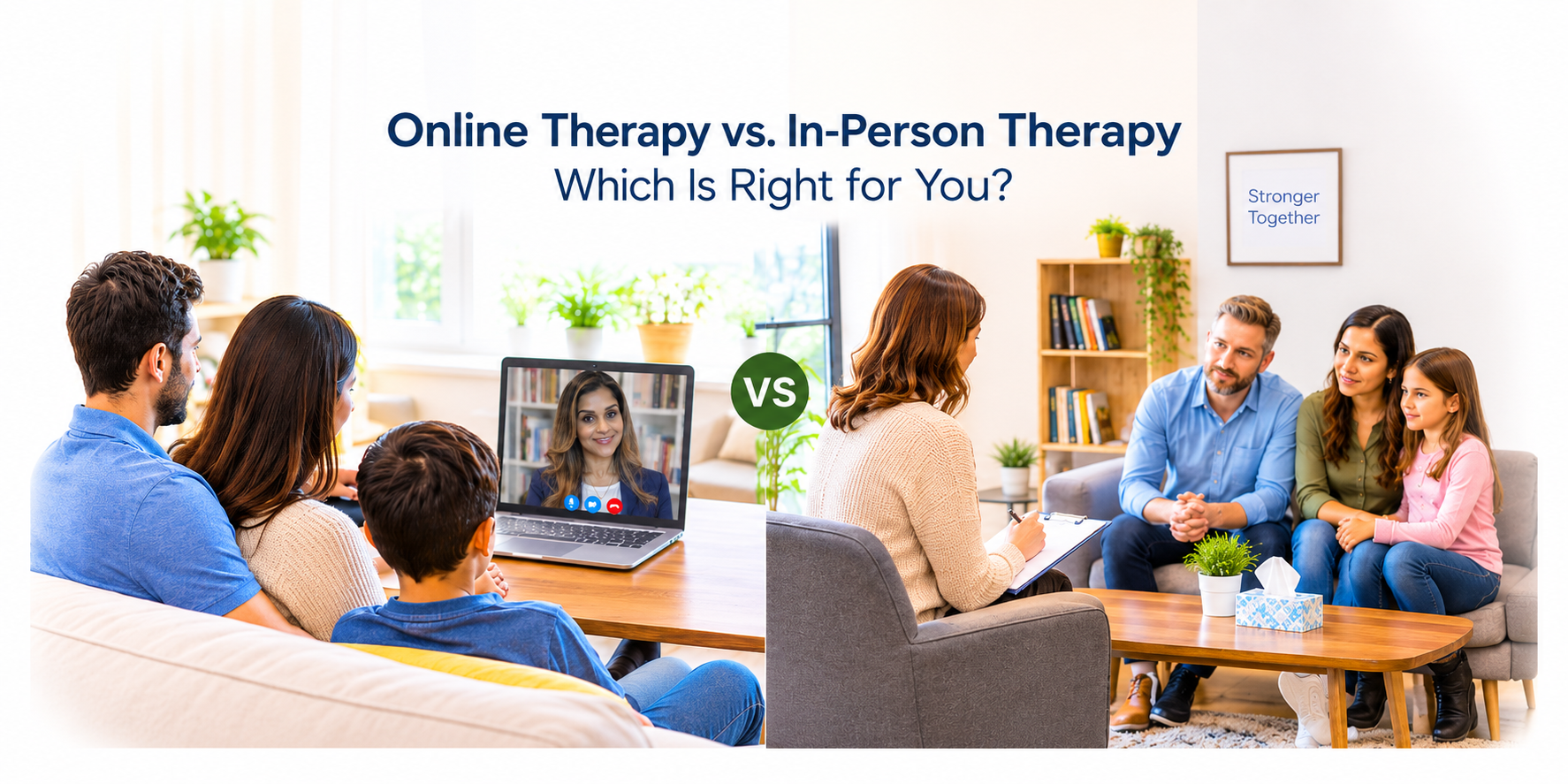
In this article, an analysis is done on online therapy vs in person therapy, the two main types of care, in terms of convenience, comfort, privacy, cost, and their applicability. This includes an explanation of how both approaches work, whom they serve, and the questions one should consider prior to deciding.
Key Takeaways
- Both formats can be effective for many people, so the best choice depends on your needs, schedule, and comfort.
- One of the main benefits of online therapy is flexibility, since sessions can take place from a private space of your choice.
- Personal training could be appropriate for people who like personal interaction or need to train somewhere other than at home.
- Difficult or demanding cases may require face-to-face treatment; therefore, consult a specialist.
What Is Online Therapy?
Online therapy, also known as teletherapy, is a term for participating in sessions with an online psychologist through video calls, telephone, or chat applications rather than going to a psychologist’s office. It uses the same methods of treatment as conventional therapy, including Cognitive Behavioural Therapy. You will have to find a quiet room, have a reliable internet connection, and use an electronic device that has a camera or a microphone. Online therapy sessions normally take as much time as traditional sessions, from 45 to 60 minutes.
Benefits of Online Therapy
Online counselling has grown popular for practical reasons. For many people, the appeal comes down to convenience, access, and comfort:
- Convenience. No travel time, and sessions are easier to fit around work or caring duties.
- Wider access. You can reach specialists beyond your city, which helps in remote areas or when mobility is limited.
- Comfort. Some people find it easier to open up from a familiar place.
- Continuity. Sessions can continue if you travel or move, provided your therapist is registered to practise where you live.
What In-Person Therapy Offers
Meeting in a dedicated room brings its own strengths. Your therapist can read body language more fully, and you step away from daily distractions for the hour. Some people simply feel more focused when therapy has its own place and time. Unlike teletherapy, there are no connection problems or background interruptions to manage.
In-person sessions can also suit people without a private space at home, those uneasy with technology, and clients whose approach works best in the room, such as some therapies for children. The trade-offs are travel time, fixed locations, and fewer therapists in some areas.

Online Therapy vs In-Person Therapy: Key Differences
When weighing online therapy vs in person therapy, neither format is better for everyone. This comparison shows where each one tends to stand out.
| Factor | Online | In person |
| Convenience | High, no travel | Lower, travel and fixed times |
| Privacy at home | Needs a quiet, private space | Provided by the therapy room |
| Personal connection | Good, though less body language | Full presence and body language |
| Access to therapists | Wider choice across regions | Limited to your local area |
| Urgent or complex needs | May need extra support | Often better suited |
Use this as a starting point rather than a rule. Many people combine online counselling with occasional in-person visits, so you are free to adjust over time.
How to Choose the Right Format
The best format is the one that fits your life and keeps you attending sessions. Ask yourself a few honest questions:
- Do I have a private, quiet place to talk?
- Does my schedule make travel difficult?
- Am I comfortable using video calls?
- Do my concerns need closer, in-person support?
- Is a suitable therapist available near me?
If a first virtual therapy session feels awkward, give it two or three more before deciding. Whichever you choose, confirm your therapist’s qualifications and ask how your information is stored. If you are in crisis or thinking of harming yourself, contact local emergency services or a crisis helpline immediately.
Conclusion
Choosing between online therapy vs. in-person therapy is less about finding the better format and more about finding the one you will use consistently and feel safe in. Convenience, privacy, personal preference, and the nature of your concerns all deserve weight. Both formats can support real progress. If your first choice does not feel right, you can switch or combine formats, because the therapeutic relationship is just as important as the setting.
At your journey to resilience, we believe support should fit into your life, not the other way around. Take a moment to note which format feels more comfortable, then speak with a qualified therapist about your options. Starting is more important than choosing perfectly, and you can always adjust as you go.
Frequently Asked Questions
Is online therapy as effective as in person therapy?
In many cases, including anxiety and depression, studies show that online therapy (teletherapy) is just as effective as conventional therapy. The effectiveness of therapy depends not only on the therapist, but also on your own engagement.
Is online therapy private and secure?
It might be, if your therapist uses a secure and confidential service, and you log on from a private place. You should inquire about data protection issues prior to your first session.
Who should choose in-person therapy?
In-person meetings might be more appropriate for individuals who value personal interaction, do not have private space in their homes, do not have adequate internet facilities, or require specialized therapy.
Can I switch between online and in-person sessions?
Usually, yes. Most therapists provide both modalities, and some clients even use both. Contact your therapist to find out more about the availability of sessions and any associated costs.
Does online therapy cost less?
This is because the cost is lower, as one does not spend on travel, and some therapists have reduced fees, though the costs differ from one to another.
Find the Format That Fits Your Life
Ready to begin? Speak with a qualified therapist about your needs and preferences, and choose the format that helps you feel comfortable, heard, and supported from the first session.